
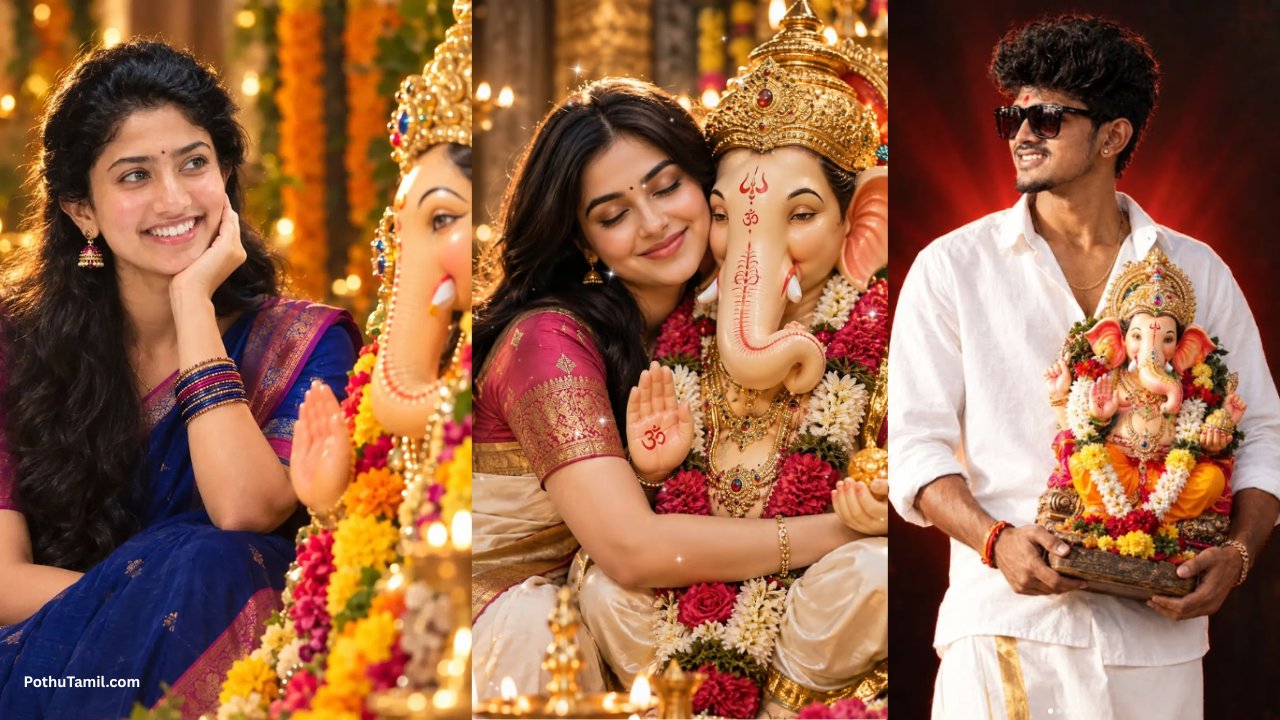
The attributes of God Ganesha are deeply connected with wisdom, prosperity, learning, protection, and the removal of obstacles.
Lord Ganesha is one of the most widely worshipped Hindu deities and is traditionally associated with auspicious beginnings. His distinctive elephant head, large ears, trunk, and other symbolic features carry different spiritual meanings.
Understanding these symbols can provide a deeper look at why Ganesha is worshipped before many important activities and ceremonies.
Who Is Lord Ganesha?
Lord Ganesha is traditionally regarded as the son of Shiva and Parvati in Hindu traditions.
He is commonly known by names such as Ganapati, Vinayaka, Vighneshvara, and Ekadanta. Different Hindu traditions and texts describe his stories and attributes in various ways.
Ganesha is particularly associated with wisdom, intellect, learning, and the removal of obstacles.
He is also traditionally invoked at the beginning of important activities because of his association with auspicious beginnings.
What Are the Attributes of God Ganesha?
The attributes of God Ganesha are represented through his distinctive physical form and the objects he carries.
Each feature is commonly interpreted symbolically.
Some of the most recognized attributes include:
- Elephant head
- Large ears
- Curved trunk
- One broken tusk
- Large belly
- Small eyes
- Four arms in many traditional depictions
- Modak
- Noose and goad
- Mouse as his vehicle
These symbols are not merely decorative. They are traditionally interpreted as representations of wisdom, discipline, humility, and spiritual understanding.
1. Elephant Head – Wisdom and Intelligence
The elephant head is one of the most recognizable attributes of Ganesha.
Elephants are traditionally associated with strength, intelligence, memory, and wisdom. Ganesha’s elephant head therefore represents qualities connected with knowledge and understanding.
This symbolism is one reason Ganesha is widely associated with learning and intellectual pursuits.
2. Large Ears – Listening Carefully
Ganesha’s large ears are often interpreted as a reminder to listen carefully.
In traditional explanations, the ability to listen before speaking represents wisdom and patience.
The symbolism encourages people to hear different perspectives and distinguish useful knowledge from unnecessary information.
3. Trunk – Adaptability and Strength
Ganesha’s trunk is another important attribute.
The trunk combines strength with flexibility. An elephant can use its trunk for powerful tasks while also using it for delicate movements.
This is traditionally interpreted as a lesson in adaptability: a wise person should know when to be strong and when to be gentle.
4. One Broken Tusk – Sacrifice and Knowledge
Ganesha is often depicted with one complete tusk and one broken tusk.
The broken tusk is associated with different traditional stories and interpretations. One well-known tradition connects it with the writing of the Mahabharata.
The symbolism is commonly understood in terms of sacrifice, determination, and the value of knowledge.
5. Large Belly – Acceptance and Balance
Ganesha’s large belly is another distinctive feature.
Traditional interpretations associate it with the ability to absorb and accept life’s experiences, including both positive and difficult situations.
It can also symbolize abundance and the capacity to contain knowledge and experience.
6. Small Eyes – Concentration
Ganesha is frequently portrayed with relatively small eyes.
This feature is traditionally interpreted as representing concentration and focused attention.
The symbolism suggests looking carefully at a situation rather than being distracted by everything around us.
7. Four Arms – Multiple Divine Qualities
Many traditional images of Ganesha show four arms, although artistic representations can vary.
The objects held in these hands also carry symbolic meanings.
Common objects include the ankusha or goad, pasha or noose, modak, and a broken tusk.
Together, these attributes are often interpreted as representing guidance, control, spiritual discipline, reward, and wisdom.
8. Modak – Knowledge and Spiritual Joy
The modak is one of the most recognizable objects associated with Ganesha.
It is traditionally considered a favorite offering to Ganesha and is often interpreted symbolically as representing the sweetness of spiritual knowledge.
The outer appearance may be simple, while the inside is considered sweet and rewarding.
This creates a traditional analogy with learning: the effort may be challenging, but the result can be rewarding.
9. Mouse – Humility and Control
Ganesha’s vehicle, the mouse, may initially seem unusual.
Traditional interpretations give the mouse symbolic significance. It can represent desires, restless thoughts, or the tendency of the mind to move constantly from one thing to another.
Ganesha riding the mouse is therefore sometimes interpreted as the ability to control desires and the restless mind.
10. Goad – Direction and Discipline
The ankusha, or elephant goad, is commonly seen in traditional depictions of Ganesha.
It can symbolize the force needed to guide something in the right direction.
Spiritually, this can be understood as a reminder that discipline and determination are necessary to overcome obstacles and stay focused on one’s purpose.
11. Noose – Control and Attachment
The pasha, or noose, is another traditional attribute.
It can symbolize attachment, desires, or the forces that hold a person back.
In symbolic interpretations, the noose can also represent the ability to restrain negative tendencies and bring the mind under control.
12. Remover of Obstacles
One of Ganesha’s most famous traditional associations is with the removal of obstacles.
He is commonly known as Vighneshvara, a name connected with obstacles and their removal.
This association explains why many devotees invoke Ganesha before beginning important activities, ceremonies, educational pursuits, or journeys.
The idea is not simply about avoiding every difficulty. It can also represent developing the wisdom and strength needed to overcome challenges.
Attributes of God Ganesha at a Glance
| Attribute | Traditional Symbolism | Common Interpretation | Associated Quality |
|---|---|---|---|
| Elephant Head | Wisdom | Intelligence and understanding | Knowledge |
| Large Ears | Listening | Hearing carefully | Patience |
| Trunk | Flexibility | Adaptability and strength | Practical wisdom |
| Broken Tusk | Sacrifice | Determination and knowledge | Perseverance |
| Large Belly | Acceptance | Handling experiences | Balance |
| Mouse | Control | Managing desires and thoughts | Discipline |
Why Is Ganesha Worshipped Before New Beginnings?
Ganesha is traditionally associated with auspicious beginnings and the removal of obstacles.
This is why many devotees invoke him before starting activities such as religious ceremonies, educational pursuits, business ventures, or other important occasions.
The tradition reflects the desire to begin an activity with clarity, wisdom, and positive intention.
For devotees, the practice can also serve as a reminder to approach a new beginning with humility and preparation.
Ganesha and Education
Ganesha is strongly associated with wisdom and learning.
Students and people involved in intellectual pursuits may worship Ganesha as part of their religious and cultural traditions.
His large ears, focused eyes, elephant head, and broken tusk are frequently interpreted as reminders about listening, concentration, knowledge, and perseverance.
These symbolic attributes make Ganesha particularly significant in traditions connected with education.
Ganesha and Prosperity
Ganesha is also widely associated with prosperity and good fortune.
His worship is particularly prominent during festivals and important occasions, including Diwali celebrations in many Hindu communities.
However, the concept of prosperity can be understood more broadly than financial wealth. It may also refer to knowledge, happiness, success, well-being, and positive beginnings.
The Spiritual Meaning Behind Ganesha’s Form
One of the most interesting aspects of the attributes of God Ganesha is that his complete form combines many different symbolic ideas.
Strength appears alongside gentleness.
Large ears represent listening, while small eyes represent concentration. The powerful elephant head is paired with a small mouse, creating a symbolic contrast between strength and humility.
These combinations are part of why Ganesha’s traditional form has remained culturally significant for generations.
Final Thoughts
The attributes of God Ganesha provide a rich collection of traditional symbols connected with wisdom, knowledge, discipline, adaptability, prosperity, and overcoming obstacles.
His elephant head represents wisdom, his large ears encourage careful listening, his trunk reflects adaptability, and his broken tusk is associated with sacrifice and determination.
The mouse, modak, noose, and goad add further layers of symbolic meaning.
While interpretations can differ across Hindu traditions, the overall symbolism of Ganesha emphasizes an important idea: approaching life’s challenges with wisdom, patience, discipline, and humility.
Frequently Asked Questions
What are the main attributes of God Ganesha?
The major attributes include his elephant head, large ears, trunk, broken tusk, large belly, four arms, modak, noose, goad, and mouse vehicle.
What does Ganesha’s elephant head represent?
It is traditionally associated with wisdom, intelligence, strength, and understanding.
Why does Ganesha have one broken tusk?
Different traditional stories explain the broken tusk. It is commonly associated with sacrifice, determination, and the pursuit or preservation of knowledge.
What does the mouse represent in Ganesha symbolism?
The mouse is traditionally given several interpretations, including desires, restless thoughts, and the need for self-control.
Why is Ganesha worshipped before starting something new?
Ganesha is traditionally associated with auspicious beginnings and the removal of obstacles, which is why devotees invoke him before important activities.
Is Ganesha associated with knowledge?
Yes. Ganesha is traditionally associated with wisdom, intellect, learning, and knowledge.