
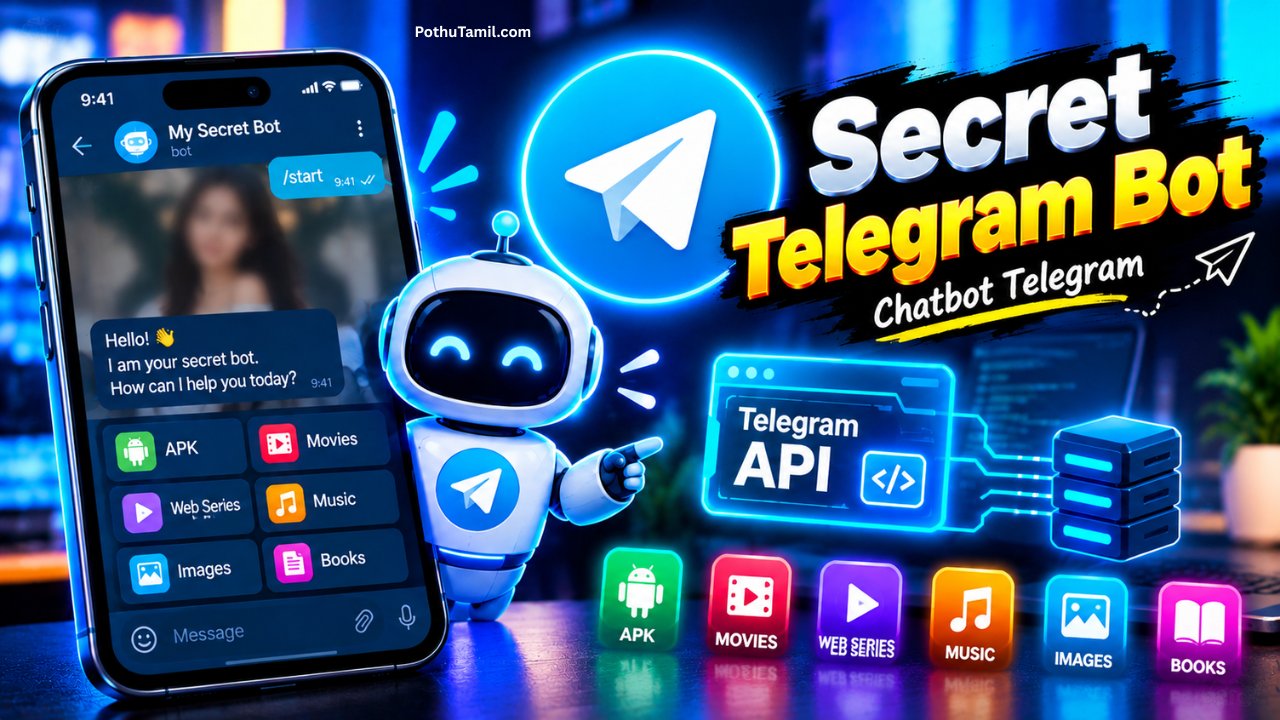
Telegram API provides developers with the tools needed to create bots, automate conversations, send messages, manage users, and connect Telegram with external applications. For businesses, developers, and online communities, a chatbot Telegram integration can turn the messaging platform into an automated communication channel for customer support, notifications, lead generation, and other workflows.
Telegram is widely used for real-time messaging, making it useful for applications that need to communicate with users quickly. By connecting a Telegram bot to a backend application through the Telegram Bot API, developers can create automated experiences without requiring users to install a separate application.
What Is the Telegram API?
The Telegram API is a collection of developer interfaces provided by Telegram that allow applications to interact with the Telegram platform. Developers can use these interfaces to build custom applications and automate different Telegram-related tasks.
For most business chatbot projects, the Telegram Bot API is the most relevant option. It allows developers to create bots that can receive messages, respond to users, send media, provide interactive buttons, and perform actions based on incoming requests.
The Telegram platform also provides a broader Telegram API and TDLib for developers building more advanced Telegram applications. The appropriate technology depends on whether the goal is to create a bot or develop a complete Telegram-based application.
How Does a Telegram Chatbot Work?
A Telegram chatbot is an automated program that communicates with users through Telegram. The bot receives a message or interaction from a user, sends that information to the connected application, processes it, and returns an appropriate response.
Developers generally create a bot through Telegram’s BotFather and receive a bot token. This token allows the application to authenticate requests to the Bot API.
Once the bot is connected to a backend system, developers can define how it responds to commands, text messages, buttons, images, files, and other supported interactions.
Creating a Bot With BotFather
BotFather is Telegram’s official bot-management tool. Developers can use it to create a new bot and configure basic settings.
During the creation process, BotFather provides a bot token. This token is important because it authenticates the application when it communicates with Telegram’s Bot API.
The token should be treated as sensitive information. It should not be publicly exposed in source code, repositories, screenshots, or client-side applications.
After creating the bot, developers can connect the token to their backend application and begin working with the Telegram API.
Telegram Bot API Features
The Telegram Bot API supports a wide range of functionality for chatbot development. A bot can send and receive text messages, images, documents, audio, video, and other supported media.
Developers can also create interactive experiences using inline keyboards, reply keyboards, commands, and callback buttons. These features allow users to interact with a chatbot without manually typing every request.
For example, a customer-support chatbot can present options such as checking an order, contacting support, or viewing frequently asked questions. Selecting an option can trigger a predefined workflow in the connected application.
Telegram Chatbot for Customer Support
A chatbot Telegram integration can be useful for businesses that receive repetitive customer questions. Instead of requiring a support employee to answer every basic request, a bot can provide automated responses at any time.
A chatbot can handle frequently asked questions, provide product information, collect customer details, and direct complicated conversations to human support staff.
When connected to a company’s internal systems, the bot can potentially retrieve relevant information and provide more personalized responses. This can make Telegram useful as an additional customer-service channel.
Telegram API for Business Automation
Telegram bots can also be used for business automation beyond customer support. Businesses can use bots to send order notifications, appointment reminders, account alerts, shipping updates, and internal notifications.
For example, an online business could connect its order-management system to a Telegram bot. When an order changes status, the backend application could send an automated message to the appropriate user.
This type of integration can reduce manual communication and allow businesses to provide real-time updates through a familiar messaging platform.
Telegram Chatbot and AI
Telegram chatbots can also be connected to artificial intelligence services. In this type of setup, Telegram handles the conversation interface while an external AI model processes the user’s request.
A typical workflow can involve the user sending a question to the Telegram bot, the backend receiving the message through the Telegram API, an AI service generating a response, and the bot sending that response back to Telegram.
This approach can be used to build AI customer-support assistants, knowledge-base bots, content assistants, and other conversational applications.
However, AI-generated responses should be monitored carefully when a chatbot is used for business-critical or sensitive interactions. Developers should also consider privacy, authentication, rate limits, and the handling of user data.
Telegram API and Webhooks
Telegram bots can receive updates using different mechanisms, including long polling and webhooks.
With long polling, the application repeatedly asks Telegram whether new updates are available. This approach can be convenient during development because it does not require a publicly accessible webhook endpoint.
Webhooks allow Telegram to send updates directly to an HTTPS endpoint controlled by the developer. This is often more appropriate for production applications because messages can be delivered to the backend as events occur.
The choice depends on the application’s infrastructure and deployment requirements.
Telegram API for Developers
Developers can work with the Telegram Bot API using many programming languages and frameworks. The API uses HTTP-based requests, which means applications can communicate with Telegram without requiring a specific programming language.
Python, JavaScript, Node.js, PHP, Java, and other programming environments are commonly used for Telegram bot development through available libraries and frameworks.
Using a bot framework can simplify tasks such as receiving updates, handling commands, managing conversations, and working with inline keyboards. Developers who need more direct control can communicate with the Bot API directly.
Telegram API vs Other Messaging APIs
Telegram API is one option among several messaging platforms available to developers. Businesses may also consider WhatsApp Business Platform, Messenger-related APIs, SMS APIs, and other customer-communication services.
Telegram can be attractive for developers because bots are built into the platform and the Bot API provides extensive messaging functionality. The best choice depends on where a company’s customers already communicate and what type of automation is required.
For businesses targeting customers who primarily use WhatsApp, for example, a WhatsApp Business API integration may be more appropriate. For communities and users already active on Telegram, a Telegram chatbot can provide a more natural experience.
Telegram Chatbot for Marketing and Lead Generation
Telegram bots can also support marketing and lead-generation workflows. A bot can collect information from visitors, provide product details, distribute promotional content, and guide users through a predefined conversation.
Interactive buttons and automated responses can make the process more engaging than a simple static form. Businesses can also connect chatbot interactions to their CRM or marketing systems to manage leads after they are collected.
However, automated marketing messages should be designed carefully so that users receive useful information rather than unwanted communication.
Is Telegram API Free?
Telegram provides its Bot API for developers to create and operate bots, but the total cost of a chatbot project depends on the infrastructure and external services used around it.
A simple bot can potentially run on relatively inexpensive hosting, while a business chatbot with a database, analytics, AI services, CRM integration, monitoring, and high traffic may require additional infrastructure.
If an AI model or third-party API is connected to the Telegram chatbot, those services can have their own usage-based or subscription costs. Businesses should therefore consider the complete technology stack rather than looking only at the Telegram API itself.
Telegram API for Businesses
For businesses, Telegram can become more than a simple messaging channel when it is connected to existing software. A chatbot can act as a communication layer between customers and business systems.
For example, a company can connect its Telegram bot with customer databases, e-commerce platforms, CRM software, help-desk systems, payment workflows, or internal notification tools.
This makes the Telegram API particularly useful for automation projects where messages need to trigger actions in another application.
Conclusion
Telegram API provides developers with a flexible foundation for creating bots and integrating Telegram with external applications. A chatbot Telegram integration can support customer service, business automation, notifications, lead generation, and AI-powered conversations.
The Telegram Bot API makes it possible to receive user messages, send responses, create interactive buttons, share media, and connect conversations with backend systems. Developers can begin with a simple bot and gradually add databases, APIs, AI services, CRM integrations, and other business functionality.
For businesses and developers already working with Telegram users, a well-designed Telegram chatbot can provide an efficient way to automate communication while keeping users inside a familiar messaging environment.